

INTRODUCTION
This is the translation of an old scriptum from the year 1910 by a Mr. Schoppenhorst from Ladbergen, Germany. This document was obtained at some point in time by Myron Fledderjohann. We have taken the liberty of correcting some misspelled words and incorrect names, but we have saved the sentence structure and grammar to maintain the character of the translation from the German language. We have added some notes at the end of the article to clarify some of Mr. Schoppenhorst’s points, which are marked with superscripted numbers corresponding to the numbers of the notes.
New Ladbergen in America
After the war of liberation (1813 – 1815) the population of our community increased so much, that many young couples could not find a home. According to a census in 1788 Ladbergen had only 1,670 people. In 1811 it were 2,220, in 1820 2,354 and in 1831 already 2,676 people. It was clear, that so many people could not live from what the small area of cultivated ground at that time could give. Therefore it was really a fortune, that people began to emigrate. It was heard, that there was land in America for only a very low price. And what a soil! It was not necessary to give dung to it. It was necessary to cut sods and to look for dung everywhere. Especially the state of Missouri was named. So, in the year 1832, some people decided to try their fortune in a strange, for them unknown country. The first of them were a Kuckhermann and a Schulte family. Their courage was indeed unexampled. Before them there was an obscure future. They didn’t have any relation to there. They only trusted in God, when they left home and fatherhouse. With a horse-car[t] they went off from here to Bremen. That was indeed a good deal of work for such a Ladbergian farmer, who had not been farther than Münster ever before in his life. It was a drive of four days to Bremen. Here they entered a big sailing ship, on which there was much freight, too. The destination was Baltimore. The trip from Bremerhaven to there lasted 7 weeks. Now they stood on American ground, they heard a strange language. They saw many new things, they had never seen before in our area. People over there were friendly and helpful. They helped them in all things.
From Baltimore they started into the interior, partly with a ship on a canal, partly with a horse-car[t]. On the way they saw all the wonderful scenery and they saw what the first settlers had done. They drove through the wild backforests, with trees scraping the sky. For a certain while they could travel with a steam-boat. But they had already three weeks before left Baltimore. Very short ago the steam-boat was invented. Hui, how that went along! They were on the way to the state Missouri and the destination was St. Louis on the Mississippi- River. One night they arrived at a small town named Mehling. Here again they could continue their trip with a steamboat to St. Louis. But Mr. Schulte was curious. He had gone to Cincinnati, to see the town; and when he returned he found his family and his colleague Kuckhermann o.k., but he did not find the boat. It had already gone to St. Louis without him. Mr. Kuckhermann now saw, that he did not have more money, to continue the trip to the west. There he was, only with his clothes on, with a small bundle on his arm, but without any money in his pocket. While Schulte and his family could continue their trip, Kuckhermann had to stay and to look for work, to get money. But this was God’s will! The Great God had taken care for him and not only for him He had looked for a place for so many Ladbergian people, where they could build their huts and find a new Heimat.
While he was walking alone through the streets with his heart full of troubles, he met two compatriots. He did not know them, but they were half Ladbergians. They were the Oltermann brothers from Westladbergen, a district belonging to the community of Saerbeck. They were also emigrated and just on the way to relatives, which were living in Stallus (a small town, which now is called Minster), which was founded by settlers from the Münsterland. They asked him to come with them; they still had money and as long as they had some, he would have also. So they went together to Stallus. Here was the place where our Kuckhermann found work and where he gained a good money. But there were all catholic people in that town. Therefore he did not like it to stay there very long; he went on to New Bremen, 5 miles more to the north. Here he worked on the canal which was under construction between Cincinnati and Toledo on a length of 200 engl. miles. Here he found good money and as he was a saver he had a good sum together after a short while. Then he wrote a letter home, in which he told about the new settlements he had seen, how inexpensive the land was and how fruitful and that there was a possibility to get a rich farmer without doing so much as they must do at home, etc. etc. He often had taken the opportunity to see the new farms.
So, in 1834 Kuckhermann’s parents-in-law, a Fledderjohann, came over. Till then they had lived in Overbeck Heuer in Wester on the Mühlenbach near the mill of Berlemann (now Kolkmeyer). At that time the house of the Fledderjohanns belonged to the catholic farmer Overbeck from Westladbergen. Mr. Fledderjohann also worked at first on the canal. But Kuckhermann as well as Fledderjohann were looking for a good opportunity to construct an own house in the woods nearby. They had not to wait too long until their hope should be fulfilled. A Mr. Lytle had got a big area of forest nearby from the government. He offered a part of that to the Ladbergian settlers. These looked over the place: what a really wonderful spot. The trees scraped like sticks the sky. Here God had created the place for the Ladbergians, to find a new Heimat, a place where they could praise Him. Here was the place where the daughter community of Ladbergen, where New Ladbergen, could grow. Very soon the purchase with Mr. Lytle was perfect, the rate was very low. Mr. Lytle gave only one condition: His mother’s maiden name was Knox, therefore he asked to call the new settlement New Knoxville1 in German: the new village of Mr. Knox. It was a pity that it could not be called Neu-Ladbergen!
Here in the backwoods they felled the trees. At first they still lived in New Bremen and walked from here to the place where they felled the trees. They cut them off with an ax about two or three feet over the surface and tried to get them on a heap. A few weeks later the lumber was dry and they could make a fire of it. In midst of the dark backwoods it was a majestic view to see the flames escape into the sky. They did not take care of the stumps and the rests of the trees. They just hacked the soil and grew corn around. A faggot was used as a harrow. The corn grew very good in this soil and gave hundred times back, what was given in. It was a joy to see how the corn grew between the stumps of the trees. After short it was flourishing very nice. A rich crop should be near. That was the time where a farmer should live on his land. So they constructed a log-house. They collected equal stems of about 15 feet in length and carved them on both ends at about 1 foot from the end. Then they laid them cross-wise in a square one over the other to a height of about 7 to 8 feet. The joints were tightened with moss. After the roof from lumber or shindles was on, they cut the door in and also the windows. Doors and windows they could get ready for use in New Bremen. Soon they prepared boards and planks. The Ladbergians knew how to do that from their Heimat. These boards and planks were for the construction of the floors and the roof and also for covering the inner walls. At first they cooked under the open air, until they constructed a small cooking house. The house had only one room and was used for living and sleeping. Really, it did not look very good from out-of-doors. Only the nice white painted windows made a little better appearance. Inside the house was real clean. There was a large bed with a nice curtain around, a neat table and some chairs; there were tapestries at the walls. Well, it really looked quite good.
How glad were our Ladbergian people when the corn was ripe, so that they could cut it. The bread was baken in each house. Soon there were some cows for milk in the settlements. And it was so easy to have swines. These animals walked through the forest and found a rich food. Only then and when they gave them some corn. When it was time to slaughter, they just took the best swine, shot it down, died it finally by blowing it with a heavy trunk[limb] Then they made bacon and sausage just as they knew it from Ladbergen. In wintertime, at first they had a lot of work. They had not only to prepare new land for their fruits and to look for new lumber for constructions. It took a long time to make fences round their acres and meadows. According to the American law everyone had to take care, that the cattle of the neighbour could not hurt his ground. And he also had to see that his cows could not reach the ground of the neighbour. Therefore they made fences all around. They used branches of trees or split big trunks and layed them criss-cross one over the other til they had a height of one to one meter and a half. These fences did not only surround the acres, but also forests and meadows. In these fenced places the cattle, and especially the swines were kept. Just keeping swines was very economical, because they could find a good food in the large forests, as glands, beechnuts and hazel-nuts. After a few years many of the new settlers did not know anymore how many swines he had. There were only a few meadows in New Knoxville. They mainly grew clover for the horses and cows in wintertime.
In 1840 there emigrated 95 Ladbergians to America, most of them to New Knoxville. There was a W. Sundermann family, a Kruse, Rethwilm, Ferlemann, Meckstroth and Lutterbeck among them. The greatest number went over in 1844, when 104 people went off from here to America. In 1840 there was also a young Kuckhermann among the emigrants, he was born October 17, 1821. He was brother of the first Kuckhermann. All the Kuckhermanns were intelligent and energetic men. And they all trusted in God. And that enabled them to do great things there in the large, far backwoods. This young Kuckhermann later on became the first preacher of the new settlements.
Until 1838 there had already settled so many Ladbergians, that they decided to found an own church community. In 1840 the community had its first Pastor, called Mr. Tanke. In January of the same year they bought 15 acres land for 60 dollars and constructed a log-church and a log-house for the preacher. They also made a cemetery near the church. On December 12 of 1841 they made a constitution of the new community, which was signed by Pastor Tanke and 40 members of the church. Among them were the following names: H.H. Holtkamp, Heinr. Hoge, H.W. Kötterheinrich, Fr. Schröer, Herm. Meckstroth, H. Niemeyer, Adolf Meckstroth, W. Wierwille, H.H. Wierwille, H. Wierwille, H. Meckstroth, H. Kruse, Fr. Wellmeyer, H. Kuck (the sacristan, called Kirchen-Kuck), Herm. Elshove, Ad. Haverkamp, H. Wilh. Wierwille, H.H. Köllmeyer, H.H. Nüssmeyer, Heinr. Kötterheinrich, G. Kötterheinrich, Wilh. Kötter, Wilh. Kattmann, Wilh. Schrölücke, Heinr. Lutterbeck, G. Fledderjohann, W. Sundermann, W. Rethwilm, Ferlemann, Adolf Fledderjohann, Heinr. Vennemann, Wilh. Kuckhermann (older brother of the preacher, called the Big Kuck), then some Non-Ladbergians as: Georg Dippel from Hessonia, Heinr. Finke, Conr. Meyer, Ludwig Bracksiek, Ernst Huedepohl, Wilh. Bracksiek.
From these 40 people in 1896 there were still three living; that were the old Pastor Kuckhermann and two other, that were born in Ladbergen. In 1843 Pastor Tanke left the young community. At this time there was a methodistic movement among the people, which brought some danger to the members of our church. From 1843 the community for a long while did not have a preacher. Then and when pastors from the neighboured towns came to celebrate a service. When there did not come any one, Mr. F.H.W. Kuckhermann, a settler, read from the Bible. This Kuckhermann was also the teacher of the small community. Afterwards he decided to study Theology. After he left school at St. Louis, he was ordinated and introduced as preacher in New Knoxville. He led the community til 1890, when he became ill and old. Now, in 1910, he is still living as a 90-year-old man in his community.
In 1853 the community bought from H. Vennemann – who had some larger lands – a place for a new church building. The old log church was since long too small and did not look very good. So they built a new larger church, a so called “Framkirche.” That is building, completely made from timber, but looking much better than the older one. The inner and outer walls are faced with boards and painted very nice. After a while they built a new part beside the church with a tower. Five years later the community built a new home for the preacher, a neat “Framhaus.” But in 1888 this was replaced by a nice brickstone building. In 1877 the community was incorporated in the Reformed Church of the United States. In 1890 Pastor Kuckhermann could not remain a preacher any more; he had served the community for more than 40 years. Then Pastor A. Schneck was called by the community; he was from Louisville. But he left New Knoxville in 1892 and founded a new community, with some members of New Knoxville community, who were not content.2 But this new community remained small, at present it has a Lutherian preacher. On October 9 of 1892 Moritz Nöll was elected as preacher of New Knoxville.
In March 28 of 1893 the community decided to build a new big massive church, after the former one was much too small. This new church stands on the place of the older one, which was enlarged by another piece of land. This is a nice big brickstone building, 90 ft. in length and 55 ft. in broadth. In the southeastern corner stands the main tower with a heighth of 125 ft., that in the southwestern corner is only 63 ft3. In the western part is the altar. In the northern part a lower and upper room for services during the week, smaller gatherings, etc. They have connection with the main part and the galleries of the church. But they can be closed and opened by sash-doors. The gallery surrounds the main ship of the church from one side to the other. Right from the altar and on the gallery is the organ. On the gallery are 200 seats (chairs), in the main part (“Schiff”) 500 people find place (banks). The whole church has seats for about 1,200 people. The whole building has heating and ventilation. The costs for the church with the tower’s clock and the seats etc., but without the organ, were about 26,000 Dollars, that are 104,000 Marks. And all this was payed full, when the building was dedicated. The commission for the construction were 15 members and the president W. Fledderjohann. The father of him was the old Fledderjohann, one of the first settlers, who here in Ladbergen lived on that place, where now is the farm of Kolkmeyer.
On my table is a photo, taken on a Sunday afternoon, when people just left the church. There is the majestic church, really a big building. And there I see so many nice car[t]s with horses in front of the building. In the right background there is a big barn for the horses, while people were in church. It can be seen from the car[t]s, the horses and also from the dressings of the ladies, that there is already some luxury in New Knoxville. But here they live as much in a Christian sense as in Old Ladbergen, no, they really are living it much more in New Knoxville. They still talk in the old Ladbergen dialect. They still use the “Ladbergen Platt.”
New Ladbergen always had good connection with its mother community. Not only that very often we received letters; there were also a lot of visitors during all the years. In the sixties there was the merchant Vennemann for a visit in Ladbergen. He had become very rich. At first he had bought a small farm. Later on he began to be a merchant, before he got rich. Here in Ladbergen he had been a farm-servant on the farm of Kötter. Another one, Mr. Heinrich Fledderjohann, son of the first settler, bought some lands and made in agriculture and lumber trade. He lived near a lock for the canal, where he constructed a saw-mill. He got very rich, so that he has now some 80,000 Dollars. His son became a medical (Dr. med.) and lives in New Knoxville. He visited Ladbergen this summer (1910). And the settler Adolf Wierwille, whose father lived as a servant on Budde’s farm, where he was real poor, is now a rich man. He had so many land, that he could give a farm to every child. The sister of the old Kuckhermann, a Mrs. Lutterbeck, also owns a store now and is very rich. She really is a Christian person and the community gives much honours to her. Everybody respected her.
There generally is Christian thinking and piety among the descendants of the old Ladbergians. They do a lot for cultivating the Christian life in the community. Dancing and visits in bars and restaurants they do not like. There is only one restaurant in the community. As this is closed on Sunday, it hardly can exist. But the young people are content and happy. They often sing songs. And they surely have popular amusements, where they can be very happy and gay. But only in the limits of good Christian thinking.
In the schools they do not have religious lessons generally. So every community has to take care that its children have religious education. Therefore they have Sunday schools in America. In New Knoxville most of the older members are also teacher in the Sunday school. That is a nice job for the Sunday afternoon. All children meet in the church, where they are divided into classes and groups. And each teacher has his group or class. The lessons were already exercised between the preacher and the teachers during the week before. Such a Sunday school is very important. It is not only useful for the children but also for the teacher. In the houses the Bible is written very often. Bible-reading is not a shame, people are proud on it. The community also gives and does a lot for the heathens. They give a lot for the missionaries. Every year they celebrate a mission-festival. Then there are many guests in the town. That is always a good opportunity for the New Knoxvillers, to show how friendly they are to their guests. This year they collected on the mission day 5,500 Mark!
One member of the community is a missionary in Japan. His name is Cook (Kuck). His real name is Kuckhermann. The first settler Kuckhermann was his grandfather. That means, that the old Pastor Kuckhermann was his grand-uncle. The maiden name of his wife was Fledderjohann. After he had become a Pastor this Mr. Cook was sent as missionary to Japan by the Reformed Church of North America. He made the trip with his wife through the west via San Francisco. After he had been in Japan during 7 years he was called back to America for a report. He decided to take the trip back through Europe, to see Ladbergen and some still living relatives, which were living there (Quiller farm). In the first days of March his ship reached Genua. And some days later the missionary, his wife and four children reached Ladbergen. On Sunday, March 6 (1910) the missionary gave the greetings of the sister community New Knoxville to the Ladbergians and he told about life and drive in our new Ladbergen. On March 9 the family left Ladbergen for Bremen. A few months later missionary Cook returned to Germany for study in the university of Halle for two semesters. But after one semester he was called back to America. Before he went back, again he visited Ladbergen and preached on our mission Sunday. He told us a lot about New Knoxville and especially about his work in Japan. He wore his Japanese clothes, when he was preaching. That gave much more interest to our Ladbergian people. On September 7 the missionary went back to America, to New Knoxville. But he did not arrive that early, that he could participate in the celebration of the American mission Sunday (Sept. 11).
This year we especially have seen that our sister community New Knoxville did not forget us Ladbergians. Here were during this year so many visitors as never before. Beside of the missionary and his family there came a Pastor Settlage from New Knoxville to here. His grandmother was a Wierwille (Inner Wierwille from “Budde’s Heuer”). With him came along a Dr. med. Fledderjohann. His ancestors lived where now is the Kolkmeyer farm. And with them was a teacher, Mr. Hildebrand from Chicago, whose father is a brother of our farmer Hildebrand. Then we had the visit of a geologist, Mr. Vennemann from Cincinnati. He wanted to see the place, where his grandmother, a daughter of the farmer Schroer, had lived. With his wife he was on a trip to a geologist’s meeting at Christiana in Norway (Christiana is now Oslo; G. Altevogt). His grandmother was the daughter of our farmer, medical and veterinary Schroer. The house was south from the farmhouse of Rahmeier. An old apple tree, which stood near the house, marks still the place. The father of the geologist was a Mr. Vennemann, who was here a farm-servant, before he left for America.
Very interesting is the annual report of the community of New Knoxville for 1910, that was recently sent to me. There I can find the following Ladbergian names: 12 Cook (from Kuck and Kuckhermann), 10 Elshove, 11 Eschmeyer, 19 Fledderjohann, 4 Haarmeyer, 12 Henschen, 19 Holtkamp, 11 Hölscher, 5 Hülsmeyer, 11 Kattmann, 19 Kötterheinrich, 47 Kuck, 4 Kipp, 14 Lutterbeck, 3 Manecke, 2 Kuckhermann, 24 Meckstroth, 9 Niemeier, 4 Nüsmeier, 4 Stolte, 3 Buddemeyer, 8 Schroerlücke, 30 Schroer, 6 Stienecker, 6 Stork, 25 Wierwille, 8 Vordermark, 2 Wiethoff, 2 Wibbeler, 3 Sundermann, 5 Feldwise, 1 Ferlemann, 1 Vennemann, 7 Hoge, 2 Kötter, 5 Aufderhaar, 2 Bierbaum, 9 Lammers, 10 Haverkamp und 2 Snethkamp. The Kuck are represented in the greatest number. Many of them should be called Kuckhermann, but the name appeared too long to the parents; so they left the Hermann and called themselves just Kuck. Some Kuckhermanns translated their name to Cook.
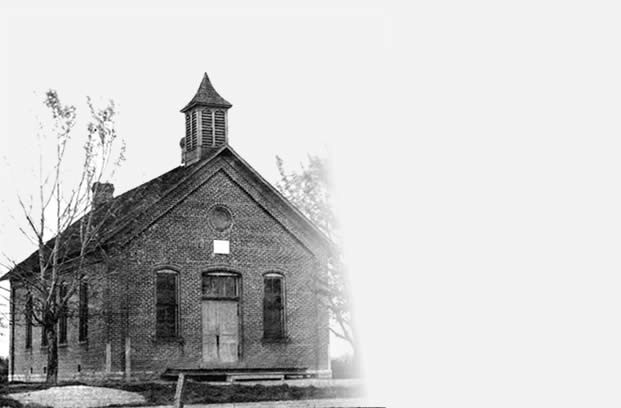
Then I see in the year report for 1910, what the community has given to the church. That is: For the Pastor 1,050 Dollar, for the organist 200 Dollar, for the man who gave air to the organ 100 Dollar, for the church’s servant 200 Dollar. Then they gave a lot for the preservation for the church’s buildings and for the enlargement and enforcement of the Sunday school and for the new Sunday school building in the other end of the town.4 And then for general welfare, for mission, children’s homes etc. all together 5,225 Dollars, that means 22,000 Mark. We really should look up to such good giving of our sisters on the other side of the ocean, where the government does not give anything for religious education. This whole education generally has to be done in the parents’ house. But this always has been a good one, as can be seen from the way of living and giving in the community.
From the community of New Knoxville came 9 Pastors and 1 missionary. That shows us that God really is honoured very much in New Knoxville. May God give, that it will be that way always in the future! May He bless the community further on from generation to generation, to His honour and glory!
NOTES:
- The name of town was not originally “New Knoxville” as indicated in Mr. Schoppenhorst’s article. Mr. James K. Lytle, the founder of the community, actually named it Knoxville. It was not changed to New Knoxville until 1858 when the village applied to the federal government for a post office. It was discovered that there was already a Knoxville, Ohio with a post office, so the “New” prefix was attached to the name.
- When Pastor Schneck left the Reformed Church he did not actually leave New Knoxville, but he did start a new congregation in New Knoxville. Their house of worship was located where the New Knoxville Methodist church building is currently located. This congregation, known as Emmanuels Church, was short-lived because most of the congregation returned to the Reformed Church when the Noll church was built in 1894. For more information on the Emmanuels Church on this website go to: History > Our Churches > Emmanuel Lutheran Church.
- In Mr. Schoppenhorst’s article he mentions the height of the steeples on the church building. The main tower on the southeast corner is 125 feet, and the one on the southwest corner is 63 feet. Originally there was a smaller tower on southwest corner of the original structure. This tower can be seen in old photos: History > Our History in Photos > New Knoxville Churches. A photo of the aforementioned Emmanuels Church can also be seen in this same album.
- The new Sunday School building that Mr. Schoppenhorst mentions in the article was not actually in New Knoxville, but it was about 4 miles to the north on what is now Washington Pike. At that time Sunday School classes were held on Sunday afternoons, and it was a rather long drive for some of the members to drive to town twice on the same day with a horse and buggy. Therefore, the Chapel Sunday School was constructed. More information is available at: History > Our Churches > The Chapel Sunday School.