
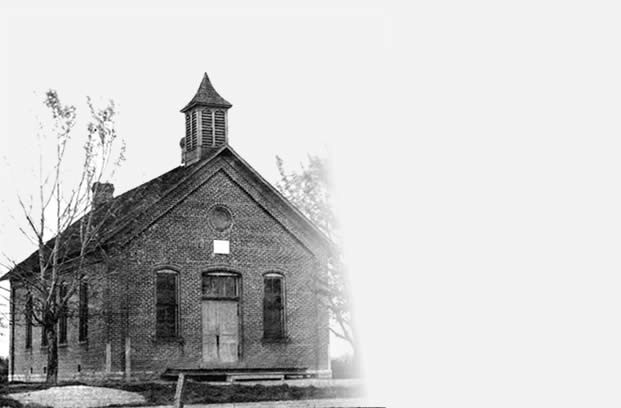

RELIGIOUS INFLUENCE ON THE SETTLING OF OUR AREA
INTRODUCTION
When the German immigrants came to our area in the 1800’s many of them became involved in the construction of the Miami-Erie canal. They settled along the route of the canal for the construction jobs and access to transportation after the completion of the project. The communities that formed in our immediate area, primarily Minster, New Bremen, and New Knoxville were segregated by culture. These cultural divisions included language differences due to different dialects of their Low German language. Differences in religious beliefs, namely Catholic, Lutheran, and German Reformed were also a major factor in this segregation between the communities.
Anne Aengenvoort, a German author who later (1999) published a book in the German language about migration, wrote this paper to be presented at the Annual Convention of the Social Science History Association in Chicago, November 16-19, 1995. This paper examines the settling of German immigrants from northwest Germany in Auglaize and southern Mercer Counties and the segregation between Catholic and Protestant settlers.
LOCAL HOMOGENEITY AND RELIGION IN 19TH CENTURY NORTHWEST GERMAN EMIGRATION TO OHIO
By Anne Aengenvoort, Bonn, Germany
Paper to be presented at the SSHA Annual Convention 1995
This paper forms part of a dissertation project titled “A Little Germany to Itself: 19th Century Northwest German Emigration and Acculturation. The Ohio Example.”1 My thesis examines a characteristic case of chain migration between two rural areas of northwest Germany and west central Ohio: between an area of 60 miles in diameter around the city of Osnabrück, Westphalia, and Auglaize and Mercer Counties in western Ohio. Of particular importance for this chain migration process were:
- in Germany the eastern part of the Prussian “Kreis”/County of Tecklenburg with the village of Ladbergen; the Principality of Osnabrück belonging to the Kingdom of Hanover; the “Ämter” (townships) of Damme, Steinfeld and Vechta in the southernmost part of the Grandduchy of Oldenburg
- in America the southwestern portion of today’s Auglaize County – Washington Township with the village of New Knoxville; German Township with New Bremen; Jackson Township with Minster – and several villages in adjacent southeastern Mercer County.
Except for the city of Osnabrück both the German and the American study regions were and still are village areas, with no village exceeding 3,000 inhabitants. The most prominent migration chain existed between Protestant Ladbergen and the village of New Knoxville and its surroundings, another large one between the Catholic “Ämter”/townships in southern Oldenburg on the one hand and Jackson Township including Minster, on the other. In 1850, 37 (95%) out of 39 German household heads identified in Washington Township/New Knoxville via cross-reference with German sources originated from Northern Westphalia, with 28 (71%) from the village of Ladbergen alone. In Jackson Township and Minster, 79 or almost 50% of the 161 German household heads identified came from the three southernmost “Ämter” in Oldenburg.2
Contrary to research on other midwestern states there are comparatively few studies on German immigration to Ohio3, except for the state’s large cities (Cleveland, Cincinnati, Columbus), whose ethnic population kindled considerable research4. The emphasis of my thesis will therefore be on one of Ohio’s rather neglected rural areas. In the west central portion of the state we find, as Walter Kamphoefner recently put it, a “best-case scenario”5 to study chain migration and its consequences: a rural area of compact German settlement. In 1850, the area of today’s German and Jackson Townships comprised the single most concentrated German settlement in Ohio. 140 years later, in 1990, 70% to 90% of Minster, New Bremen and New Knoxville inhabitants still reported German ancestry6.
“A little Germany to itself” – this quotation from an interview with an Auglaize County resident, suggests the four crucial issues my thesis will eventually cover:
- Proof and analysis of the chain migration process through individual record linkage between sources in Germany and Ohio (about 400 individuals identified)
- Examination of the “mechanics” of those local chains
- Evaluation of the degree of the emigrants’ transatlantic socio-economic mobility
- Transplantation of culture and the processes of acculturation
This paper only deals with the latter aspect – the cultural, in this case the religious baggage the emigrants took with them and its consequences for the lives of the German immigrant communities. Over the years many people, indigenous and else, have stated that until very recently the German-American inhabitants of Auglaize and Mercer Counties were “special” in certain ways and features. An article titled “God’s Country” in Ohio Magazine (1992) identified several allegedly characteristic traits of the region: its many “amazing churches (…) with a towering steeple,” its “built-in conservatism,” the “neatness, order and efficiency,” but also a “closed society” with a feeling of being “special in God’s eye7.” A prominent expert in sociology of religion observed a “unique religious heritage” in his home town New Knoxville as well as in neighboring Minster and southern Mercer County, which created a strong work ethic that still runs through the communities today8. Yet despite their seeming likeness, the three villages under scrutiny, not five miles apart from each other, differ in one essential factor: their religious affiliation. It was along the lines of denominational differences that the villages were first settled (Minster: staunch Catholic; New Knoxville: staunch Protestant-Reformed, and New Bremen: mostly Protestant-Lutheran), and until today those strong affiliations have hardly diminished.
What makes these rural German-American villages in Ohio interesting in this respect is that the first and second generation immigrants9 largely came from the same small area, speaking the same kind of dialect (‘Plattdeutsch’ or Low German); yet despite this almost identical origin they settled strictly along denominational lines, and the ensuing segregation between Catholics, Reformed and Lutheran Protestants, could not have been more pronounced if the settlers had come from different areas in Germany or even from different countries. This strict segregation was, as it seems, above all due to the strong religious fervor to be found in the area, which is present in both Catholic and Protestant congregations. The church was and still is the predominant social force at least in Catholic Minster and Reformed New Knoxville. Both towns, small as they are, over the years became national and international mission centers for their respective creed. In the 1950s New Knoxville, for example, was nominated one of the four “great churches” of America, due to its extraordinary “output” of clericals and missionaries (42 in its 120 years of existence)10. In a survey conducted in 1935, the New Knoxville reformed Church was one of only four very large Reformed congregations in Ohio with a membership of over 1,00011. Today, a globally operating Christian Bible Center called “The Way International” has its 600-employee headquarters adjacent to the 1,500-souls village of New Knoxville12. A neighbor once commented dryly on the piety of the New Knoxville people, “they know angels down there.”13
The same kind of ardent piety existed in Catholic Minster, where, according to the German newspaper Minster Post in 1896, even lesser Catholic holidays were subject to more enthusiastic celebration than Independence Day in other villages.14 By 1940, Minster’s St. Augustine parish had “produced” two bishops, 30 priests and 26 sisters.14 During most of the 19th century, St. Augustine parish and its daughter parishes in Mercer County served as the American headquarters of the Order of the Society of the Most Precious Blood (C.PP.S). A shrine for pilgrimage was installed at Maria Stein, about five miles from Minster, to contain the relics of saints brought over from Europe.16
In both communities, their religious zeal created a feeling of superiority towards the neighboring German immigrant villages.17 Thus, Catholics and Protestants, but also Protestants of Lutheran and Reformed affiliation, hardly ever mingled. As late as the 1950s and 1960s there were little town skirmishes between boys, and urgent warnings from parents of all creeds not to marry out of your congregation, let alone out of your village. Segregation was strong, and neither the common ethnic background of the emigrants and their offspring nor their common dialect had created a more communal behavior.18 Within German Township the rift between Protestants and Catholics became so acute that in 1858 the township council decided on a political division along religious lines: the southern, thoroughly Catholic portion of German Township was established as a separate entity called Jackson Township, while the more denominationally diverse northern half remained German Township.19 Thus, religious segregation was re-enforced and even officially accepted by administrative separation.
Statements like these about rural ethnic settlements sound quite familiar to American immigration scholars. Among those who made similar observations for rural German immigration areas is Kathleen Conzen, who studied a German Catholic settlement area in Stearns County, Minnesota, which by its outward appearance alone seems very similar to the Auglaize/Mercer County unit: a preponderance of German names in the phone book, peculiar parish church steeples, multi-generation marriage links, traces of the German language, of traditional clericalism and devotionalism. Russell Gerlach and Walter A. Schroeder arrived at similar conclusions analyzing the extensive German Catholic settlements in the northern and eastern Ozarks, Missouri. According to Schroeder and others, one-church immigrant villages were often characterized by a conservative religious faith, religious homogeneity and a sense of separateness from others.20 Above all, scholars nowadays seem to agree that the decisive factor in all these cases of compact settlement was not merely a common ethnicity, but a common local and religious background. As Prof. Conzen put it: “Culture was more strongly localized (…) than it was ethnicized.” To “localized,” I would add ‘religiousized.’21
With the extraordinary religious ardor of the Auglaize and Mercer County area permeating church and town histories/records, immigrant letters, newspapers and interviews conducted with the descendants of North-west German immigrants, two questions arose: First, was the ardor of faith and the strong group adherence displayed by these immigrants and their children a result of their rural immigrant situation alone? Which role did the ‘religious baggage’ play they brought over from Europe? And second: Was their fervor re-enforced by their homogeneity of origin?
I shall argue that in the case of the southern Auglaize and Mercer County Germans there indeed were peculiar factors and causes in their home area, northwestern Germany, which made both Catholic and Protestant emigrants very much aware of their faith and which, once they were in America, created and maintained a cultural and community life ‘soaked’ with almost clannish religiosity.
At first sight, the religious conditions in the Ohio study area present nothing out of the ordinary: A certain exclusionist behavior as displayed particularly by the Reformed (New Knoxville) and the Catholic (Minster) congregations22 was in itself nothing peculiar. Due to the important role commonly assigned to the immigrant church, namely to preserve values and a continuity with the cultural past, religious affiliation was a decisive and often emotionally charged issue among settlers of all countries. Norwegian and Swedish Lutherans and Baptists, for example, experienced a lot of interdenominational competition and rift, which highlighted the differences between neighboring settlements and entailed, among other things, a very low rate of intermarriage between congregations.23
Also, the establishment of daughter churches from an initial mother church, as happened in southern Auglaize and Mercer Counties through the Society of the Most Precious Blood, was quite frequently the result of a scarcity of priests on the frontier rather than a truly missionary effort.
But there were what I would call “home factors” involved in the case of “my” northwest German immigrants which intensified these ordinary processes and imbued them with a new quality. For one thing, it was the fact that both the Catholic and Protestant emigrants were denominational minorities in their respective areas of origin. The eastern part of the Kreis (County) Tecklenburg, including the village of Ladbergen, was a thoroughly Protestant island within the greater administrative entity, the almost 90 percent Catholic District of Münster (one of the three districts that made up the Prussian Province of Westphalia).24 This was due to the fact that while most of the surrounding territory had, for centuries, belonged to the Bishopric of Münster, one of the numerous German states of the time, this particular area had once belonged to the Calvinist Count of Tecklenburg. There had been ongoing, sometimes even violent quarrels between Catholics and Protestants, who felt discriminated against, in other parts of the Kreis Tecklenburg,25 and although the Ladbergen area had never been involved in the conflicts, the people there must have known about them and been aware of their own outsider status. Until far into the 20th century, for example, the people from Ladbergen and neighboring Lienen avoided contact with the Catholic inhabitants of the adjacent Kreis Warendorf (esp. the village of Ostbevern). This segregation was perpetuated in the New World, when Ladbergen and Ostbevern emigrants settled in New Knoxville and Minster, respectively.
The area of heavy Catholic emigration in southern Oldenburg presents further evidence of religious isolation due to historical shifts in government. Its religious history was characterized by constant ruptures: Until the beginning of the 19th century, the area belonged to the Bishopric of Münster politically (Niederstift Münster), but some villages (Damme and Neuenkirchen) were religiously bound to the Bishopric of Osnabrück. Thus they were the object of and battleground for recurrent antagonisms between the two clerical states. Furthermore, those villages each had a Protestant minority, which caused additional ruptures. After the clerical states had ceased to exist in 1803, the northern portion of the Bishopric of Münster, the Ämter Vechta and Cloppenburg, was given to the Duchy of Oldenburg, a thoroughly Protestant state, and became its southernmost part. Through all these conflicts and because of their conspicuous cultural difference from the new “fatherland” the people of this Catholic area developed a whole new identity as the “Oldenburger Münsterland,” as it came to be called.26
Since both the Protestant and the Catholic region of emigration under scrutiny were “diaspora” or denominational islands, their inhabitants, according to my hypothesis, developed a strong group identity based on their religious faith. It was this sense of belonging together under adverse circumstances that they brought over to the New World. And when the Catholic and Protestant settlement societies which founded Minster, New Bremen and New Knoxville bought acreage very close to each other in the early 1830s,27 it did not take much to predict that the separatist tendencies developed in Germany would not fade but on the contrary prevail and grow stronger.
The emigrants from the former Bishopric and then Principality of Osnabrück were religiously more diverse, with no area having a predominant faith.28 Interestingly, those emigrants tended to settle in the northern part of German Township, which was neither entirely Protestant nor Catholic. Later, this area with New Bremen at its center became much more open to new denominational groups than Minster and New Knoxville, the current number of denominations in New Bremen running up to 16 (as against two in New Knoxville and one in Minster).29
There is a second “home factor” likely to be responsible for the religious ardor of the Catholic and Protestant immigrants to Ohio. Parallel to the first massive northwest German emigration phase in the 1830s to 1850s, Germany experienced a time of intense theological and dogmatic quarrels within the Protestant and, to a lesser extent, the Catholic church. Among Protestants, a growing neo-pietist awakening movement fought against the theological rationalism and alleged “liberalism” that had developed as a result of the Enlightenment.30 Ministers preached against a growing moral laxness supposedly brought about by the diminution of the role of hell and damnation in Protestant theology, the emphasis on the human role in redemption and, in short, the de-mythologization of religion.31
In the Reformed village of Ladbergen, too, rationalist-minded ministers met with deep scepticism. Rather, the congregation was profoundly influenced by the neo-Calvinist teachings of the then famous Krummacher family of theologists and ministers, whose three most prominent members preached in northwestern Germany during the first half of the 19th century. The family originated from Tecklenburg and in this area seems to have exerted its most lasting influence. One member, Justus Moritz Krummacher, served the Ladbergen community during the first years of heavy emigration, from 1832 to 1836.32 Religious ardor and moral rigor reigned, dance events were not allowed, and people accused of adultery were brought before the Presbytery, a procedure much like being sentenced in court.
After the first group of Ladbergeners arrived at Washington Township in 1833, the first priest they could secure for their small congregation was also “touched by rationalism.” He tried to insert a paragraph about the “freedom of choice in the quest for religious truth” into the congregation’s new constitution. This ‘frivolous’ idea led to a dangerous rupture within the community, and according to a church history it was only the conservative faith of those being taught by Krummacher which saved the congregation from falling apart.33
Among the northwest German Catholic emigrants, a discontent with ‘modern’ religious thought is less clearly visible than in Protestant congregations. Still, the first temporary priest of Minster, Ohio, a teacher and chaplain from the Principality of Osnabrück, left his profession and Germany out of dissatisfaction with rationalist tendencies within the church and his school.34 Ironically, the influence of German theological thinking on the large Catholic emigrant contingent from southern Oldenburg and the subsequent formation of an unrelenting faith became strong only in America, as a consequence of developments during the settlement phase: In 1845, the southern parts of Auglaize and Mercer County, in the process of being settled almost exclusively by Catholic Germans, were put under the religious auspices of the small but zealous Order of the Society of the Most Precious Blood (C.PP.S). In the subsequent 140 years, this order was to provide all the priests for the area. The founder and Provincial of the American Province of the Order stationed near Minster, a Swiss monk by the name of Franz Brunner, had left the Benedictines for the much stricter Trappists before eventually joining the Precious Blood Order. In his intense piety Brunner, much like the Protestant Krummacher preachers, fought against the “evils of liberalism,” which in his view had affected the Catholic clergy, and he deplored the “excessive worldly sin” present in his times.35 And quite akin to the Puritan abhorrence of useless entertainments or laziness, his ideal was a community where “gossip and chatter are never heard, nor does one see an idle man.” Complete quiet on Sundays had to be obeyed instead of the customary family visits, walks, festivities or other Catholic Sunday entertainments.36 Thus was the mental framework according to which Brunner taught his fellow priests, and which profoundly shaped the Catholic congregations in the Auglaize/Mercer County area for decades.
Two factors, then, intertwined to create and perpetuate the ardent belief present in the Catholic as well as in the Protestant community under study: first, a very acute self-assessment of the German parent communities as diaspora congregations tied together by God and fate, and second, the widespread opposition of priests or influential members of the congregations to a rationalist, more “relaxed” kind of faith, which resulted in an even more pronounced withdrawal into the stern faith of the group.
I am suggesting, therefore, that the amazing cohesiveness of isolated emigrant settlements may have had causes more deep-rooted than scholars have observed so far. Geographical isolation or the fact that one-church villages tended to display an extraordinary sense of allegiance were certainly important factors in the creation of a robust, change-resistant German-American church and culture. But in my opinion one should not neglect to take into account the forceful impact of specific circumstances in the emigrants’ home countries, which could spill over to the New World settlements and which were strongly re-enforced by the fact that these denominational groups came from a very limited number of villages in Germany.37
What happened was a transfer not only of many specific local cultural traditions (architecture, festivities etc.), a process typical of chain migration, but also a transplantation of definite moral and ethical principles growing out of the deep, village-oriented religiosity of the immigrants. Endurance, perseverance, and moral firmness were basic values for the faithful of both Catholic and Protestant denomination.38 Hard work and abstinence from secular pleasures were enforced by the Catholic and Protestant communities in Ohio. The specific type of denomination seems to have been less important here than the strict moral framework which sprang from ardent Christian piety and from a specific religious experience transferred from the homeland to America. Thus, the characteristics regarded as special with the Missouri or Minnesota Catholics, above all their “unusually coherent culture,”39 may not have been so unusual and specifically Catholic after all, but a phenomenon that may be observed quite often in areas where a common ethnic and religious origin of the settlers was supplemented by geographical and economic isolation.
Cohesion was certainly encouraged and even enforced by the rigid social control a closely related group will exercise over its members in an environment perceived as non-friendly in terms of nature and neighbors. In Minster and New Knoxville, the main goal of this pronounced social and moral control was to preserve the Old World solidarity of the group through prohibition of out-marriage and the non-admission of outsiders.40 Faith, social control, geographic isolation and the urge to bond all made conservativist attitudes and a strict moral and work ethic prevail in these one-church communities.
This conservatism also affected other cultural areas. The German language, for example, was spoken, at least in its dialect form of Low German, until far into the 20th century, and the last regular German sermon in New Knoxville was held as late as 1947.
A strong conservative streak, in terms of morals and of holding on to (northern) German traditions, has frequently been noticed by observers of the study area. As one inhabitant of New Knoxville said in the 1980s: “Although our former first language, Plattdeutsch, is spoken by only a few, the culture remains. The conservatism of the people is the key factor in everyday life, and the Protestant [and Catholic (the Author)] work ethic is the inner drive.”41 With this in mind, it does not come as a surprise that, while America’s rural areas are facing increasing depopulation and economic stagnation, the southern Auglaize County area is still, if modestly, growing economically as well as in population figures.42
The examination of a rural area of compact ethnic settlement represents only one direction in German-American acculturation research. But as long as the transatlantic aspect in German-American acculturation studies is still a field so insufficiently explored,43 the at first sight ‘easy’ selection of a “best-case scenario,” in which chain migration as well as religious homogeneity played an important part during the long process of acculturation, might be excused.
1I am grateful to the German Marshall Fund of the United States for a travel grant to attend the SSHA conference. I also wish to thank Walter D. Kamphoefner, to whose work and help my thesis project is much indebted.
2For the individual record linkage between Auglaize County and northwest Germany, the following sources were used (selected list): For Ohio, manuscript census returns of 1850 for Auglaize County (on microfilm at the Ohio Historical Society, Columbus). For northwest Germany, the emigrant lists in: Friedrich Müller, “Westfälische Auswanderer im 19. Jahrhundert. Auswanderer aus dem Regie-rungsbezirk Münster, 1803-1850.” In: Beiträge zur Westfälischen Familienforschung 22-24 (1964-1966), pp. 7-389; Friedrich Ernst Hunsche, Auswanderungen aus dem Kreis Steinfurt. Mit Beiträgen im Anhang von Friedrich Schmedt (Schriftenreihe des Kreises Steinfurt. Beiträge zur Geschichte, Kultur und Wirtschaft, vol. 3), Steinfurt 1983; Johannes Ostendorf, “Zur Geschichte der Auswanderung aus dem alten Arnt Damme (Oldenburg) nach Amerika in den Jahren 1830-1880.” In: Oldenburger Jahrbuch des Landesvereins für Landesvereins für Geschichte und Heimatkunde 46/47 (1942-43), pp. 165-297. Unpublished sources: for the Principality of Osnabrück the emigrant data bank at the Niedersächsisches Staatsarchiv Osnabrück, used with kind permission of the archive. For southern Oldenburg, emigrant list researched by local historian Father David Hoying, Fort Recovery, OH (several hundred entries). This latter source is far more informative for southern Oldenburg than the emigrant index card file at the Niedersächsisches Staatsarchiv Oldenburg.
3Among the few survey publications on the German-American population of Ohio are Hubert Wilhelm, “Germans in Ohio.” In: Allen G. Noble (Ed.) To Build a New Land: Ethnic Landscapes in North America, Baltimore, MD 1992, pp. 60-78, and ibid., The Origin and Distribution of Settlement Groups, Ohio, 1850, [manuscript, Athens, OH] 1982. Among the older literature the following titles are the most useful: Philip L. Brown, “People On the Move: The Foundation of Ohio’s Ethnic Composition, 1870-1900.” Unpubl. Master’s Thesis, Ohio State University 1966; Carl Wittke, “Ohio’s Germans, 1840-1875.” Ohio Historical Quarterly 66 (1957), pp. 339-354.
4See, for example, the numerous publications by Don Heinrich Tolzmann on German immigrants in Cincinnati, among them The Cincinnati Germans After the Great War (American University Studies, Series IX, History: vol. 16), New York, NY 1987 and ibid., The Survival of an Ethnic Community: The Cincinnati Germans 1918 Through 1932 (PhD. Diss., Cincinnati 1983), Ann Arbor, MI 1988, but also Joseph Michael White, “Religion and Community: Cincinnati Germans 1814-1870.” PhD. Diss., Notre Dame, IN 1980, and Guido Dobbert, The Disintegration of an Immigrant Community: The Cincinnati Germans, 1870-1920, New York 1980 (repr. of unpubl. 1965 dissertation). On Cleveland see Lubomyr R. Wynear et al., Ethnic Groups in Ohio, with Special Emphasis on Cleveland: An Annotated Bibliographical Guide, Cleveland, OH 1975. On Columbus, see La Vern J. Rippley, “The Columbus Germans.” The Report (Society for the History of the Germans in Maryland) 33 (1968), pp. 1-45. There are several other studies on smaller towns as well as on religious communities like the Mennonites or Amish.
5Walter Kamphoefner, “Review Essay: Interdisciplinary Perspectives on Rural Immigration and Ethnicity.” Journal of American Ethnic History 14 (Summer 1995), pp. 47-52, here p. 52.
6The Evening Leader (St. Marys), February 6, 1993, pp. 1,5. The relevant publications on this area are: La Vern J. Rippley, “The German Element of West Central Ohio.” In: German American Studies 8 (1974), pp. 89-105; Wolfgang Fleischhauer, “German Communities in Northwestern Ohio: Canal Fever and Prosperity.” In: The Report (Society for the History of the Germans in Maryland) 34 (1970), pp.23-43, and Hubert Wilhelm, “A Lower Saxon Settlement Region in Western Ohio.” In: Pioneer America Society Transactions IV (1981), pp. 1-10.
7John Baskin, “God’s Country.” Ohio, Vol. 15 (August 1992), pp. 116, 121, 137.
8Wayne Wenning, “Religious History Very Unique in Auglaize County.” In: The Evening Leader (St. Marys), January 1, 1992, p. 6D.
9About 400 of those immigrants to German and Washington Townships could be identified by record linkage.
10Cornelia L. Rodeheffer Schröer, What Makes New Knoxville Special, as Portrayed in the Lives of Eighteen Women, Morioka 1986, pp. 123, 131 ff.
11The other large congregations were located in much more sizeable cities: Cincinnati, Akron and Canton, cf. Heinz Kloss, Atlas der im 19, und frühen 20. Jahrhundert entstandenen Deutsch-Amerikanischen Siedlungen in den USA, Marburg 1974, map I 7.
12On The Way International, founded in 1942 by a German ancestry citizen of New Knoxville, see Our Times, New Knoxville, Ohio, Auglaize County Sesquicentennial 1836-1989, Chelsea, MI 1986, p. 164 f.
13Citation taken from a series of tape-recorded interviews conducted in 1959-1962 by Wolfgang Fleischhauer, Ohio State University; here Friedland Purpus, New Bremen, 1960 (Ohio Historical Society, Reel 11). New Bremen itself was, however, intensely Protestant: In 1935, it was the home of one of the five biggest evangelical churches in southwestern and central Ohio (the others being in Hamilton, Dayton, Springfield, Cincinnati), cf. Kloss Atlas, map H 1.
14Minster Post, Vol. 1, No. 25, August 27, 1896.
15A list of Minster parishioners who entered the religious life in Louis A. Hoying / Rita M. Hoying / David A. Hoying, Pilgrims All. A History of Saint Augustine Parish, Minster, Ohio 1832-1982, Minster OH 1982.
16Paul J. Knapke, History of the American Province of the Society of the Precious Blood, 2 Vols., Carthagena, OH 1968, p. 91.
17This mutual feeling of superiority was one of the recurrent themes in interviews with southwestern Auglaize County residents, both published, or conducted by W. Fleischhauer and myself. Cf. the local historian Luke Knapke in Baskin, God’s Country, p. 137, and my interview with Annette Kuck, New Knoxville, July 24, 1992.
18A statement published in Our Times, p. 19, is highly typical of many similar interview passages. Rose Thompson, New Knoxville, narrates from her youth in the 1950s: “My family was not originally from this area. I found the community very clannish (…). The town wanted everything kept in the community. We were not allowed to bring dates from out of town to school functions.”
19/sup>Cf. Hubert Wilhelm, “A Lower Saxon Settlement Region in Western Ohio.” In: Pioneer America Society Transactions IV (1981), pp.1-10: 2.
20Kathleen N. Conzen, “Deutsche Einwanderer im Iändichen Amerika: Problemfelder und Forschungsergebnisse.” In: Bade, Klaus J., (Hrsg.) Auswanderer – Wanderarbeiter – Gastarbeiter, Bevölkerung, Arbeitsmarkt und Wanderung in Deutschland seit der Mitte des 19, Jahrhundert. Vol. 1, Ostfildern 1984, pp. 350-377; ibid., Making Their Own America, Assimilation Theory and the German Peasant Pioneer. With comments by Mack Walker and Jörg Nagler (German Historical Institute, Washington D.C., Annual Lecture Series No. 3), New York, Oxford, München 1990, pp. 1-33. Russel L. Gerlach, Immigrants in the Ozarks: A Study in Ethnic Geography (University of Missouri Studies, Vol. 64), Columbia, MO 1976; Walter A. Schroeder, “Rural Settlement Patterns of the German-Missourian Cultural Landscape.” In: Howard W. Marshall / James W. Goodrich (Eds.), The German-American Experience in Missouri, Essays in Commemoration of the Tricentennial of German Immigration to America, 1683-1983 (Publications of the Missouri Cultural Heritage Center, No. 2), Columbia, MO 1986, pp. 25-43, 40. – More recently, Sonya Salamon published an insightful study of a mixed German Catholic and Protestant area in Illinois; she maintains that despite denominational differences concentrated German settlements had their peculiar customs of inheritance and attitude towards the family. See Sonya Salamon, Prairie Patrimony: Family, Farming and Community in the Midwest, Capel Hill 1992.
21Conzen, Making Their Own America, p. 9. The same point is made by Frederick Luebke, “Three Centuries of Germans in America.” In: ibid., Germans in the New World: Essays in the History of Immigration (Statue of Liberty-Ellis Island Centennial Series), Urbana, IL 1990, pp. 157-189, 168, and Timothy L. Smith, “Religion and Ethnicity in America.” In: American History Review 83 (1978), No. 5, pp. 1155-1185, 1168 f. - For a similarly prominent role of the church among Dutch Catholic immigrants see Yda Schreuder, Dutch Catholic Immigrant Settlements in Wisconsin 1850-1905, New York, London 1989.
22The seclusiveness of the New Knoxville Evangelical and Reformed Church may prove to some extent that the Methodist, Reformed and Evangelical churches were not necessarily more ecumenically inclined than Catholics and Lutherans; the latter was suggested by Walter Kamphoefner, “Perspectives,” p. 52.
23The essential role and functions of religion in the immigration and acculturation process have been stressed many times, see, for example, Smith, “Religion,” p. 1158 f., 1168 ff.; for Germans, Reinhard R. Doerries, “Immigrant Culture and Religion; Church and Faith Among German Americans.” In: Randall M. Miller (Ed.), Germans in America: Retrospect and Prospect. Tricentennial Lectures Delivered at the German Society of Pennsylvania in 1983, Philadelphia, PA 1984, pp. 75-91, esp. 85 f. – The fact that the intense faith in one-church villages quite often led to severe ruptures and even schisms within congregations, although towards the outside they presented a monolithic body for most of the time, can only be mentioned in passing. This less idealistic aspect of homogenous settlements was particularly stressed by Scandinavian scholars dealing with predominantly Protestant emigrants, cf. Robert Ostergien, A Community Transplanted. The Trans-Atlantic Experience of a Swedish Immigrant Settlement in the Upper Middle West, 1835-1915, Madison, WI 1988, p. 211-217, 233, and Ann Marie Legreid and David Ward, “Religious Schism and the Development of Rural Immigrant Communities: Norwegian Lutherans in Western Wisconsin, 1880-1905.” In: Upper Midwest History 2 (1982), pp. 13-29 – Interestingly, two and more schisms also occurred in the Reformed congregation of New Knoxville and the Lutheran community of New Bremen, cf. Edwin R. Kuck, An Historical Account of the Early Religious and Social Life of the New Knoxville, Ohio Community, 1836-1900, New Knoxville,OH 1962, pp. 7-18, and 150th Anniversary, St. Paul United Church of Christ, New Bremen, Ohio, 1833-1983, [New Bremen, OH 1983], pp. 26-30, 46 f.
24In 1843, far more than half the small Protestant population of the District of Münster lived in Kreis Tecklenburg. Within the Kreis, the “Amt”/township of Tecklenburg and the towns of Lengerich, Ladbergen, Lienen and Westerkappein, all located to the east, were over 98% Protestant. Cf. Stephanie Reekers, Westfalens Bevölkerung 1818-1955, Die Bevölkerungsentwicklung der Gemeinden und Kreise im Zahlenbild (Veröffentlichungen des Provinzialinstituts für westfälische Landesund Volkskunde, Reihe I, Heft 9), Münster 1956, pp. 32 ff., and A. Diening, Topographischstatistische Übersicht des Regierungs-Bezirks Münster. Aus amtlichen Quellen zusammengestellit, Münster 1846, pp. 1, 10 f.
25Albin Gladen, Der Kreis Tecklenburg an der Schwelle des Zeitalters der Industrialisierung, Münster 1970, pp. 62-68.
26Hannelore Oberpenning, “Verwaltungsgeschichte Dammes – ein historischer Überblick.” In: Klaus J. Bade et al. (Eds.), Damme: eine Stadt in ihrer Geschichte. Sigmaringen 1993, pp. 17-44; Christoph Reinders-Düselder, Ländliche Bevölkerung vor der Industrialisierung, Gebert, Heirat. Tod in Steinfeld, Damme, Neuenkirchen 1650-1850. (Materialien und Studien zur Alltagsgeschichte und Volkskultur Niedersachsens, Heft 25), Cloppenburg 1995, pp. 15, 48-52; Heinz-Joachim Schulze, “Vom Niederstift Münster zum Oldenburger Münsterland. Das Werden einer historischen Landschaft.” In: Oldenburger Jahrbuch 80 (1980), pp. 77-97.
27The most concise history of the settlement of the southern Auglaize County area is Fleischhauer, German Communities, but it is advisable to consult each town’s official History as well as the Histories of their principal churches in addition for necessary details.
28Source: Survey of the religious conditions in the Landdrosteibezirk Osnabrück, 1833 (Niedersächsisches Staatsarchiv Osnabrück Rep. 335, Nr. 844, Fol. 12 ff.).
29The settlement structure was derived at least for the first few decades from the list of identified emigrants and their settlement according to the manuscript census returns of 1850 for Auglaize County.
30Hans-Ulrich Wehler, Deutsche Gesellschaftsgeschicte, Vol. 2: Von der Reformära bis zur industriellen und politischen “Deutschen Doppelrevolution” 1815-1845/49, 2nd ed., München 1989, pp. 459-467.
31Kathleen N. Conzen, “Germans,” in: Stephan Thernstrom et al. (eds.) Harvard Encyclopedia of American Ethnic Groups, Cambridge, MA 1980, pp. 405-425, 417. For Württemberg: Peter Marschalck, Deutsche Überseewanderung im 19, Jahrhundert, Ein Beitrag zur soziologischen Theorie der Bevölkerung, Stuttgart 1973, p. 56. For the influence of the Enlightenment on Christian belief see Sydney E. Ahlstrom, A Religious History of the American People, New Haven, London 1972, pp. 351-359.
32For a survey of the lives of Friedrich Adolf Krummacher (1767-1845), his son Friedrich Wilhelm (1796-1868) and his brother Gottfried (1774-1837) see the respective articles in Meyers Konversationslexikon, vol. 10, 5th edition, Leipzig/Wien 1897, p. 780. For Ladbergen see Saatkamp, Ladbergen, p. 78 f., 83, and Centennial Souvenir, in Story and Pictures Presented in Commemoration of One Hundred Years of Worship and of Service. The First Evangelical and Reformed Church, New Knoxville, Ohio [New Knoxville, OH 1938], p. 18.
33Quotations translated from the manuscript written by Pastor Moritz Noll in 1893: “Geschichte der ersten deutsch evangelischen reformirten Gemeinde in New Knoxville, Auglaize Co., Ohio” (possession of Myron Fledderjohann, New Knoxville).
34When Father Johann Wilhelm Horstmann emigrated in 1833, he took with him a group of 8 to 10 Catholic families. They founded Glandorf, another entirely German settlement in Putnam County, northwestern Ohio. Cf. Karl Kiel, “Gründe und Folgen der Auswanderungen aus dem Osnabrücker Regierungsbezirk, insbesondere nach den Vereinigten Staaten, im Lichte der hannoverschen Auswanderungspolitik betrachtet.” In: Mitteilungen des Vereins für Geschichte und Landeskunde von Osnabrück 61 (1941), pp. 85-176, 121, 123; Michael Leach, Called to the Vineyard. A Definitive Study of the Religious Community in Glandorf, Putnam County, Ohio (1834-1900), and its Societal Impact as Symbolized by St. John the Baptist Roman Catholic Church, Glandorf, OH 1982, pp. 7-11; Knapke, History, p. 113. – The emigrants in Horstmann’s party might may have shared his criticism of Rationalism, but they must not be thought of as religiously motivated emigrants in the first place. Like the vast majority of northwest German emigrants they primarily looked for socio-economic improvement, and took this opportunity to travel as a group under the leadership of a trustworthy priest.
35Hoying, Pilgrims All, p. 81 f. A thorough history of the Precious Blood Order in the United States up to 1860 with special reference to Franz Brunner is Knapke, History; on his religious beliefs see esp. vol. 1, pp. 40-42 (quotations p. 40). In the beginning (1846), only 20 brothers and students and 35 sisters belonged to the American Province of the Order (pp. 99,101).
36Knapke, History, p. 127 f. (quotations from letters by Franz Brunner).
37A similar, though more tentative observation was made by Schreuder, Immigrant Settlements, p. 134 f.
38Conzen, “Making,” p. 19 ff., enumerates endurance, perseverance, and moral strictness as the central values of rural Catholic immigrant communities.
39Ibid., p. 20.
40On social control in ethnic and religious groups cf. Harold J. Abramson, “Religion,” in: Stephan Thernstrom et. al. (eds.) Harvard Encyclopedia of American Ethnic Groups, Cambridge, MA 1980, pp. 869-875, 874, and Smith, “Religion and Ethnicity,” p. 1159.
41Our Times, p. 185. – It is important to note that other villages and areas of strong northwest German immigration especially from the Catholic Oldenburg-Osnabrück region had a religious development quite similar to the Auglaize/Mercer County experience. Cf. in southeastern Indiana David S. Dreyer, A History of Immigration to the Batesville Vicinity. Commemorating the Sesquicentennials of Oldenburg, Huntersville and Penntown, and the 900th Anniversary of Venne, Germany, Indianapolis 1987, and in central Illinois Franz-Josef Tegenkamp, “150 Jahre Teutopolis – deutsche Siedlung in Illinois.” In: Heimatblätter 68 (1989), pp. 35-49.
42Wenning, “Religious History, p. 6D.
43Among the growing but still insufficient number of studies with an explicitly transatlantic approach that covers the entire migration process of distinct individuals and groups are Walter D. Kamphoefner, Westfalen in der Neuen Welt. Eine Sozialgeschichte der Auswanderung im 19, Jahrhundert (Beiträge zur Volkskultur in Nordwestdeutschland, vol. 26), Münster 1982 and its American counterpart The Westfalians, From Germany to Missouri, Princeton 1987; Karen Schniedewind, Begrenzter Aufenthalt im Land der unbegrenzten Möglichkeiten. Bremer Rückwanderer aus Amerika 1850-1914 (Von Deutschland nach Amerika, vol. 8), Stuttgart 1994; Gerhard Wiesinger, Die deutsche Einwandererkolonie von Holyoke, Massachusetts, 1865-1920 (Von Deutschland nach Amerika, vol. 7), Stuttgart 1994, and Uwe Reich, “Zur Sozialgeschichte der Auswanderung aus dem Regierungsbezirk Frankfurt/Oder im 19. Jahrhundert,” in: Jahrbuch für Wirtschaftsgeschichte 2 (1992), S. 97-127.