

by Andrew Kay (published December 10, 1949)
J. Henry Roediger Has Had Busy Life Since Coming to U.S. from Germany; Takes Time Off Now to Enjoy Fishing and Deer Hunting
When a man has successfully withstood being transplanted from one country to another, has learned the language of his adopted country and become a loyal citizen, has raised a family of 12 living children, all of them married and good citizens, and has in addition prospered materially and really knows his business, and together with his wife is spry and alert and active at age 75,—there’s somebody worth meeting! When you learn that this same person is still an active fisherman and deer hunter, keeps a boat at Lake St. Marys, and already has a cottage rented in Michigan for next summer’s fishing,—and can talk to you by the hour on the fine points of his business—that makes you want to give his hand an extra few shakes. Specifically, we are speaking of J. Henry Roediger, retired farmer and still active “Keeper of the Bees” residing on his farm near the hamlet of Lock Two a mile or two East of New Bremen. We are indebted to Bud Kettler, Editor of the New Bremen Sun, for directing us to Mr. Roediger.
He was born in Tann, Germany, August 21, 1874, worked on a farm in his home community till he was 18, journeyed to the Ruhr Valley where he learned the moulding trade, remaining there 8 months. At age 20 he was scheduled for induction into the Imperial German Army. He wrote to two of his uncles in America, Conrad and George Roediger, asking—“Which is best,—that I stay in Germany or come to America?” They advised him to come to America and paid his way from Bremen, Germany to St. Marys, Ohio. That was in 1893 when he was 19.
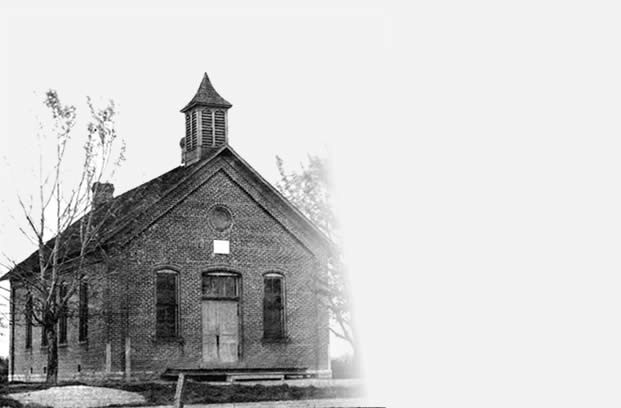
“I boarded the ship at Bremen on Dec. 9, 1893 and arrived in St. Marys Dec. 29, at 4 o’clock in the morning. I was now in a strange country and there was of course nobody there to meet me. What a feeling that was. And I could not speak English. But the conductor on the train could speak German. They held the train long enough until the conductor got somebody out of bed who would take me in temporarily. The man who took me in was Billy Eiting. The next day Uncle Conrad Roediger came and got me. He lived on what is now the Steva farm at Moulton. He got me with his spring wagon. That was my first glimpse of this community, riding on a spring wagon from St. Marys to Moulton. What a feeling it was. I still remember it distinctly. The sights were all new to me. The distances seemed so great. I worked for my uncle on his farm the next 11 months. The next winter I made my home with my father’s uncle, the late Conrad Eichenhauer. There I worked for my board while I attended the Feil School to learn English. That first winter I attended school 66 days and the second winter 26, taking up English, reading, writing and spelling. Then for 11 months I worked for a Mr. Young on his farm east of St. Marys. They neither spoke nor understood German so now I had to speak English.”
While there he learned to know a young lady from New Knoxville by the name of Anna Eschmeier, daughter of Adolph Eschmeier. Their interest in each other was mutual. Sometimes he would visit her by bicycle, sometimes he walked “and sometimes the Steva boys would take me along, for they, too, had interests in New Knoxville.” On March 3, 1898, they were married by Rev. Noll and lived in New Knoxville 10 years working in the Hoop Factory in which Mr. Roediger had two shares. He had become interested in bees through his school teacher in Germany who had invited him to go along when he tended his bee hives. Now he started “playing around with bees.” Then he moved to what is today the Fred Wierwille farm north of New Knoxville where he lived for 3 years. Then he bought his present 98½ acre farm on R.F.D. 1, New Bremen, a mile east of Lock Two and engaged in general farming. But with it he also took up bee-keeping on a commercial scale having, at the height of his career up to 300 hives, his best harvest of honey being in 1936 when it totaled exactly 12 ton! He retired from farming 7 years ago, except “for keeping a few bees.” When asked what “a few bees” meant he said “Well I harvested only 6 ½ ton of honey this past summer!” When I asked if he ever got stung, he smiled. “If I had a dollar for every time that I have been stung, I could buy a big farm with the proceeds. I mind a bee sting far less than a mosquito bite. A bee sting itches me only about 10 minutes, but a mosquito bite itches me for 2 days. I wear a mask over my head when I work with them, but I work with bare hands. I often get stung. But when you get stung 30 to 35 times in one day it really makes you feel bum!”
He has his “few bees” in 6 different locations. “Too many bees in one area is like having too many cows in one pasture,” he explained. He said that most people are unaware of how beneficial bees really are. “Prof. Dunham of Ohio State University has made extensive tests by covering patches of clover with mosquito netting to keep the bees away from the clover blossoms. His experiments lead him to state that for every dollar that the bee keeper nets from a given hive, the community within a 2-mile area nets $10 to $15.” He referred to an article in a bee journal which stated that nursery men pay as much as $3.50 per hive to have bees in their orchard during blossoming time.
Bee keeping is both an art and a science, we learned. It is sufficient of both so I will not even attempt to describe the various processes involved all the way from feeding the larvae to removing, extracting, packaging and marketing the honey. Seldom have we found anyone at his age so enthused about what is today his hobby, and so replete with information, as is Mr. Roediger. Throughout the years he kept in close touch with the Ohio State Experiment Station and is still an ardent reader of its publications and still makes use of its findings. But like folks in every kind of a profession or work “there are days when I have wished that I had never seen a bee hive.”
Bits of information that I jotted down include “I import my queen bees from Alabama. The larvae of a queen bee grows so fast that in 12 days time it gnaws its way out of its cell and is a full fledged queen bee, ready to fly. If a human infant had the same rate of growth, it would be bigger than the biggest elephant in 12 days time. We control swarming by giving a given swarm plenty of room and ventilation so that they never feel crowded. So we have but few swarms fly away. But today we also clip one of the wings of the queen bee. That prevents her from leading the swarm away. During the war honey was in far greater demand than today because of the lack of sugar. We then had New York firms stop here, offering to buy our entire output and even provide transportation. That would have saved us a lot of work—but of course we couldn’t do that. Our regular customers would have been left in the lurch. I was County Bee Inspector for 16 years, but I resigned that.”
He took us to his “Bee House” in which he showed us what to me looked like huge quantities of honey-in-the-comb which he has stored just in case the winter should be unusually long or severe. This honey is then put back into the hives for the bees to feed on. He periodically inspects his hives during the winter, making sure that all is well, including the bees’ supply of honey for food. He showed us the machine which is used to extract honey and the honey casts of his own manufacture. When he displayed a jar of the unclouded golden nectar and told of the work involved, bee-labor and human labor, Andrew Kay resolved to look with respect upon the next bee that he meets, and he resolved that he will try not to get excited should he get stung a mere once or twice by a ”busy little bee, who improves each shining hour, by gathering honey all the day, from every bud and flower!”
Both Mr. and Mrs. Roediger are young in spirit and both look much younger than their 75 years. Their 12 living children are Esther (Mrs. August Hegemier) living on the Town Line Road; Leota (Mrs. Elmer Kellermeyer) St. Marys; Walter, farmer and bee keeper, near Kettlersville; Frank, New Bremen; Marie (Mrs. Wilbert Dammeyer) R. R. New Bremen; Chester, farmer, near Neptune; Elmer, farmer, on the home place; Emil, welder, Fort Wayne, Indiana; Ruth (Mrs. John Johnson) Muncie, Indiana; Vernon, Hondo, Texas, interior decorator; Mildred (Mrs. Richard Sudman) R. R., St. Marys; Kenneth, Farm Machinery Operator, Perryton, Texas.
Mr. Roediger became a naturalized American citizen in 1898, after being here 5 years. He still has 2 brothers and 1 sister living in Germany who experienced great hardship during the war and in whose immediate families 6 were killed. “Just yesterday I mailed them another package.” Mr. Roediger is glad that he came to America but is not ashamed of his ancestry. In 1929 he and his daughter Leota visited the old country and also travelled through France, Switzerland, Holland and England. His favorite sports are hunting and fishing. He already has a cottage engaged in Michigan for next summer’s fishing. I asked about two mounted deer heads on the wall of the room in which we were sitting. Yes, he had bagged them himself. Then he told of 4 deer trips that he has made to Texas, 1 to Canada and 1 to Pennsylvania. “But this year I didn’t get to go deer hunting.” He also has a boat at Lake St. Marys and was keenly interested in the recent Leader articles on “Lake St. Marys, Then and Now.” He speaks a better English than do many folks who were born and raised here. He is proud of his 29 grandchildren and 4 great grandchildren.
Living Biographies
by Andrew Kay
In 1949 and 1950, Reverend Edwin Andrew Katterhenry (1900-1963), a minister and a native of New Knoxville, wrote the “Living Biographies” feature for the St. Marys Evening Leader under the pen name of Andrew Kay. These articles consisted of interviews with aging citizens, many from New Knoxville and St. Marys, relating their experiences from their younger days. After Rev. Katterhenry passed away in 1963, his widow, Florence Katterhenry returned to New Knoxville to live out the remainder of her years until 1982. For those of us who are grandparents today, we remember her as “Mrs. K”. In the final “Living Biographies” article Andrew Kay wrote about himself, thus revealing his identity to the general public.