

by Andrew Kay (published December 10, 1949)
Henry G. Wellman, New York Educator, Recalls Youth At New Knoxville and St. Marys High School Class of 1905
He Is Keen Student of U.S. and World History
“How dear to my heart are the scenes of my childhood” and “with fond recollections” he presented some childhood scenes to our view. Who? Prof. Henry George Wellman Ed. D., 440 Riverside Drive, New York City. Where? On the porch of the Wellman family home on the grounds of the Wellman Nursery just East of New Knoxville. Dr. Wellman is a retired History Professor; retired, but not yet tired. American History is his fore. He has taught a total of 37½ years, the last 25 years of which he was Chairman of Social Studies Department of the New Rochelle High School of New York.
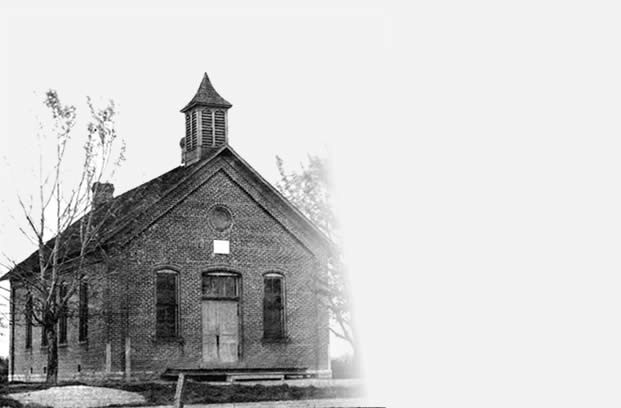
“This is the first September in more than 50 years that I didn’t have to worry about a tardy bell,”—Mr. Wellman mused. He began worrying about the tardy bell at the very place where we had this all-afternoon visit together, we forgot to ask just how many years ago. He attended the New Knoxville Public School and then the St. Marys High School from which he was “graduated” after three years. New Knoxville didn’t have a high school in those days.
His earliest recollections of life at home center around the nursery which his father, the late George Wellman, established in 1888. These memories have to do with “planting, planting, planting,—spraying, spraying, spraying,—picking, picking, picking,—trimming, trimming, trimming,—cultivating, hoeing, boxing, and selling fruit and vegetables.” Boys were a real economic asset at a nursery and the Wellman boys never found time on their hands for lack of things to do.
Mr. Wellman’s High School class was the class of 1905. Modesty doesn’t appear to have been the predominant virtue of that predominantly feminine class, for its class motto was “THE ONLY CLASS ALIVE!” But we should explain that the words “predominantly feminine” refer to the fact that the class numbered 23 girls and 4 boys. The boys were Tom Schoonover, Harvey Swift, William E. Vordermark, and Mr. Wellman, the latter two (half of the boys) supplied by New Knoxville. Mr. Vordermark has just been retired from his life long position with the Ohio State Experiment Station at Wooster, Ohio. During his senior year at St. Marys High School Miss Caroline Schulenberg became their physics teacher. “I always brought my lunch to school and during the last half of the noon hour I would rig up the physics apparatus that we would be using in the afternoon. For that she gave me chocolate coated caramels, a supply of which she always kept in her desk. I remember, too, how she used to tell us about her pet snake which homed in her garden and which would wiggle out to welcome her during the warm early fall mornings.
“From Lillian Williams I learned that ‘All Gaul is divided into three parts!’ I’ll never forget that sentence. Years later, when I was at Harvard, Professor Copey was our English Literature professor. We had 3 members in my class who ALWAYS came late. One day he had just started to lecture when in came our 3 chronic late-comers. He stopped his lecture, looked at the three offenders, smiled and said, ‘Caesar hath truly spoken, all G-A-L-L is divided into three parts!’ The class laughed uproariously, and the boys somehow managed to get there on time thereafter. It was a case of Shakespeare’s ‘Many a truth is uttered in a jest!’
“My first contacts with St. Marys was when I would accompany my father to the R. B. Gordon Mill. Mr. Gordon was later elected U. S. Representative. During my High School days I peddled, delivered, sold fruits and vegetables house to house with horse and spring wagon. I think I was acquainted in more fruit-cellars in St. Marys than any one else. They trusted me and folks would say ‘Take so much of this or so many of that, to the fruit-cellar.’ Through my school and Saturday connections I came to know and remember many of the old timers in the business world. I saw Albert Herzing walking to the Woolen Mill, Mr. Dunan walking to the First National Bank, W. H. Doll to his drugstore; R. H. Armstrong to his shoe store, Dave Armstrong to his dry goods store, and Johnny Hauss, always on the run, on the way to his store. But a second contact with St. Marys which left an indelible impression were the annual Harvest Home and Mission Festivals at St. Paul’s church which to me were soul stirring occasions.”
Following graduation from high school he took and passed the teachers examination and taught at the Shinbone School the next two years. Then he attended Ohio State University, transferred to Harvard University from which he was graduated in 1912 with a Bachelor of Science degree. He recalled that Albert Veenfliet was the first St. Marys lad to be graduated from Harvard and that he was the second St. Marys H. S. Alumnus. Now he taught in Massachusetts one year after which he took his Masters degree at Columbia University. He next taught in Connecticut and New Jersey. The past 25 years he taught in the New Rochelle, New York, High School where he was Chairman of the Social Studies Department. In 1938 he received his Doctor’s Degree in Education from New York University. But he by no means considers himself on the shelf. He believes that education is a life long process and accordingly has enrolled for the fall term in the Institute of Arts and Sciences of Columbia University! In addition he has planned 10 years of travel, lecturing and writing, meanwhile making his home in New York and Florida. He believes that life is an ever moving process and that unless one continues growing and learning, mental disintegration sets in.
His more than professional interest in American History has induced him to visit most of the places of historical interest East of the Mississippi. These include the First Colony Attempt by Sir Walter Raleigh at Roanoke Island, North Carolina; the oldest American City, St. Augustine, Florida; the first settlement at Jamestown, Va.; and numerous others. He has seen and heard every president since Theodore Roosevelt and has attended five inaugurations. Mr. Wellman has studied and taught American History against the background of our unhappy European antecedents and believes that only ignorance can cause any intelligent American to despise the American ideal, heritage and background. His interest and convictions in this matter accounts for the fact that this year one of his history students won the National American History Prize of $2,000 offered by William Randolph Hearst in a three-hour, 100-question examination participated in by pupils from 3,000 high schools in our 48 states.
Mr. Wellman’s interest in World History has led to two European trips and a third one is now in the offing. He has visited the World Court at The Hague, The World Bank at Basel, Switzerland, The Carnegie Institute of International Conciliation for Peace in London and Paris, among other history making places of interest. His lecture trips have taken him up and down the Atlantic Seaboard. He has lectured under the auspices of the University Women’s Association, the Foreign Policy Association, United Nations Association, League of Women Voters, and C. E. Union, the Huguenot Historical Association and the Thomas Paine National Historical Association. Of the latter two he is a member of the Board of Directors. But Mr. Wellman frankly admitted that the address which gave him his biggest thrill was when he gave the Fourth of July address at the New Knoxville picnic the year following his graduation from Harvard.
Naturally we pressed him for his reasoned and studied reactions and opinions regarding America and her future. We quote: “Government control of activity is the natural result of increased education. The whole world is following it. Government acts as a balance wheel between producer and consumer, labor and capital, artisan and profession, and, we might even add, between city and country. We are one of the last countries to adhere to individualism. A country can adhere to individualism as long as there remains a frontier. Social Justice is now our frontier. Man has to learn to control himself instead of nature. BUT WE HAVEN’T LEARNED THAT YET. Therefore we have all this turmoil. Education without Christianity is often a menace.”
Here he waxed philosophical. “People with money, but without God, have no balance wheel. Life is spiritual as well as material. Too many leave out the spiritual altogether and so are without conscience and a sense of responsibility.” He told of a certain Thanksgiving morning when he was in The Bronx in New York City. He was looking for a church having a Thanksgiving Service. He entered a small Lutheran Church. The gist of the Pastor’s Sermon had been—“MAY YOUR HEALTH AND YOUR WEALTH PROSPER AS YOUR SOUL PROSPERS!” “That sermon made a profound impression upon me and still voices my belief and conviction that wealth without spiritual health will result in the abuse or the selfish use of that wealth, that when a man or a woman acquires wealth, God gets a partner and man gets a friend,—or else the person loses his soul!” In this connection it would be a long story to go into Mr. Wellman’s activities as President of The New York City Christian Endeavor Union, his years of teaching Bible Classes, his lectures to Church Groups, as well as his deliberate Christian witness on the Lecture Platform. He holds his church membership and is an active layman in the Broadway Presbyterian church in New York City.
He makes his home with his sisters Emma Wellman and Lena (Mrs. Paul) Kohler at their Riverside Drive address. “Teaching and gardening go hand in hand. Teaching gets on a person’s nerves,” he said. “Gardening helps to restore your nerves and tends to keep one down to earth, to keep one’s feet on the ground.” As such he has, all through these years, been maintaining a roof garden atop the Wellman apartment building on Riverside Drive. “We have a regular flower garden up there. The ground is in big boxes, 14 of them. We have hose up there for sprinkling and in season, we have an abundant supply of cut flowers. We even have picnics up there.” We asked, “How did you get the ground up there and where did you get it?” He laughed. “We had to pay a dollar a bushel for it. But it was worth it. When God made man He placed him in a garden.”
Henry Wellman’s brothers are Arthur Wellman who today operates the Wellman Nursery at New Knoxville and Dr. Homer Wellman of Atlantic City. Another sister, Marianne, who was the wife of Dr. Walter Mayer, died in 1941. Mr. Wellman has been a subscriber of The Evening Leader for over 40 years.
Living Biographies
by Andrew Kay
In 1949 and 1950, Reverend Edwin Andrew Katterhenry (1900-1963), a minister and a native of New Knoxville, wrote the “Living Biographies” feature for the St. Marys Evening Leader under the pen name of Andrew Kay. These articles consisted of interviews with aging citizens, many from New Knoxville and St. Marys, relating their experiences from their younger days. After Rev. Katterhenry passed away in 1963, his widow, Florence Katterhenry returned to New Knoxville to live out the remainder of her years until 1982. For those of us who are grandparents today, we remember her as “Mrs. K”. In the final “Living Biographies” article Andrew Kay wrote about himself, thus revealing his identity to the general public.